Why I'd Still Rather Ask a Human: The Quiet Value of a Local CBD Counter
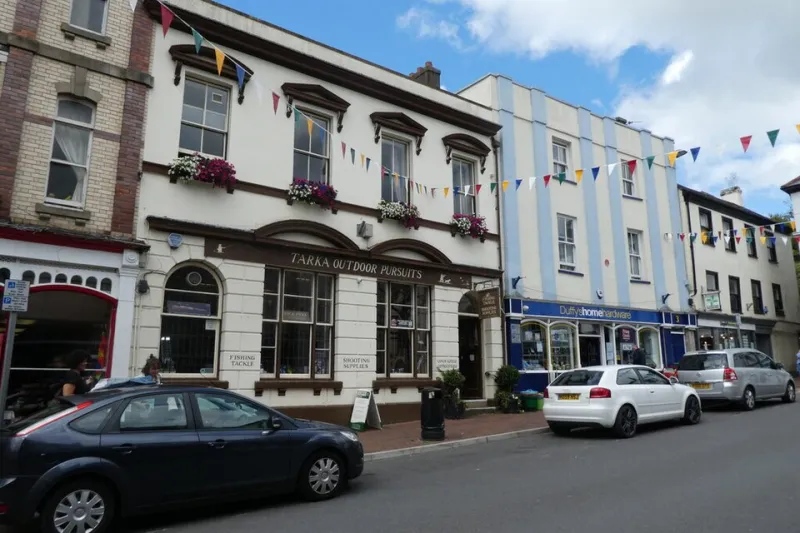
Photo: Roger Cornfoot , CC BY-SA 2.0, via Wikimedia Commons
There is a particular kind of confidence that comes from a checkout page. Everything is in stock, the price is right there, and nobody is going to ask you what you're planning to do with it. Click, confirm, done. I use it constantly for socks and screwdrivers.
But CBD is a slightly odd thing to buy blind. Not because it's mysterious — it isn't — but because the useful information tends to live in the gaps between the label and your actual life. How strong is this, really? Is the number on the front the same as the number on the back? Do I take it with breakfast or after work? A product page will answer none of that. A person will.
That's the case I want to make here, and it isn't really an argument against the internet. It's an argument for the counter down the road.
What a checkout page can't tell you
Online shopping is excellent at showing you what a product is. It's much weaker at telling you whether it's right for you.
Take strength. Two bottles can both say 'full spectrum' and cost roughly the same, yet one delivers a very different amount per drop than the other. A listing will show you the millilitres and the milligrams. It won't lean over and say, 'most people starting out find this one easier to pace'.
Then there's the label question. In the UK, CBD products are sold as food supplements rather than medicines, and the labelling is not always as tidy as we'd like. Batches vary. Wording wobbles. A shop that has actually read the paperwork — and asked suppliers awkward questions — can save you a lot of squinting.
And finally, routine. This is the bit nobody puts on a product page. When you'd use it, how often, alongside what else. That's a conversation, not a specification.
Three questions worth asking at the counter
If you're going to make the trip, make it count. These are the three we get asked most, and they're the right ones.
1. How strong is this, in plain English?
Don't be shy about asking someone to translate the label. A good counter will tell you the milligrams per bottle, roughly what that means per drop or per spray, and which end of the range suits someone who's never tried CBD before. If the answer is vague, that tells you something too.
2. What's actually in it — and what's the batch story?
Ask about the certificate of analysis. Ask whether the THC level is stated. Ask where it's made and whether the supplier is on the UK's approved list for novel foods. These aren't trick questions, and no decent shop should flinch at them. A shop that keeps a folder of batch documents behind the till is a shop that has done some homework on your behalf.
3. Where would this fit in my day?
This is the question that separates a sale from a service. CBD oil under the tongue in the morning is a different habit from a balm rubbed into a sore shoulder after gardening, which is different again from a capsule with dinner. Describing your normal day — the commute, the school run, the gym on a Thursday — is genuinely useful information. Use it.
Accountability you can walk to
There's a quieter advantage too, and it's about what happens after you buy.
If a bottle doesn't suit you, an online return is a form and a queue at the post office. If it doesn't suit you at Green Lane, you can pop back in, say so, and we'll talk it through. Maybe the strength was wrong. Maybe the carrier oil didn't agree with you. Maybe you simply didn't get on with the taste, which is a perfectly good reason.
That kind of feedback loop is worth more than it sounds. It means the person recommending something has to live with the recommendation. In a shop where you'll see the same faces on a Saturday, 'it's fine, it's popular' stops being an adequate answer.
The neighbourhood bit
I'll be honest about the bias here: we are a neighbourhood shop, so of course we'd say this. But the neighbourhood model isn't nostalgia. It's practical.
It means local delivery that actually lands when it says it will, because the person packing it knows the postcode. It means click-and-collect that's a five-minute walk rather than a locker in a retail park. It means being able to ask, 'is this the one my sister bought?' and getting a real answer.
It also means a shop that has to be a decent neighbour. We're not going to oversell a strength you don't need, because you'll be back in for a paper on Sunday.
A sensible word on the caveats
None of this is medical advice, and a friendly chat at a counter is not a substitute for one. CBD is sold as a food supplement in the UK, not a medicine, and it isn't intended to treat or prevent anything. If you're pregnant, breastfeeding, taking prescribed medication, or managing a health condition, speak to your GP or pharmacist first. We're happy to talk about products; we're not the right people to talk about your prescriptions.
We also won't sell to under-18s, and neither should anyone else.
Come and ask us the awkward question
So yes, keep the one-click checkout for the things that don't need a conversation. But if you're new to CBD, or you've been buying the same bottle for two years out of habit, come in and ask something. Ask why the strengths differ. Ask what the certificate means. Ask which one you'd take on a stressful Tuesday.
The counter chat isn't a quaint extra. In 2026, with more products and more noise than ever, it might be the most useful thing on the high street.