Small Bottle, Big Breath: Why a CBD Taster Beats a Costly Leap of Faith
Photo: Museum of Antiquities of the University and Society of Antiquaries of Newcastle upon Tyne, Robert Collins, 2008-09-10 16:45:45, CC BY-SA 2.0, via Wikimedia Commons
There is a particular kind of quiet that happens at a shop counter on a wet Tuesday afternoon. Someone is holding a bottle of CBD oil, turning it over, reading the label for the third time, and doing the mental arithmetic. Sixty quid. For something they have never tried. You can see the argument happening behind their eyes: it might be lovely versus that is the weekly food shop.
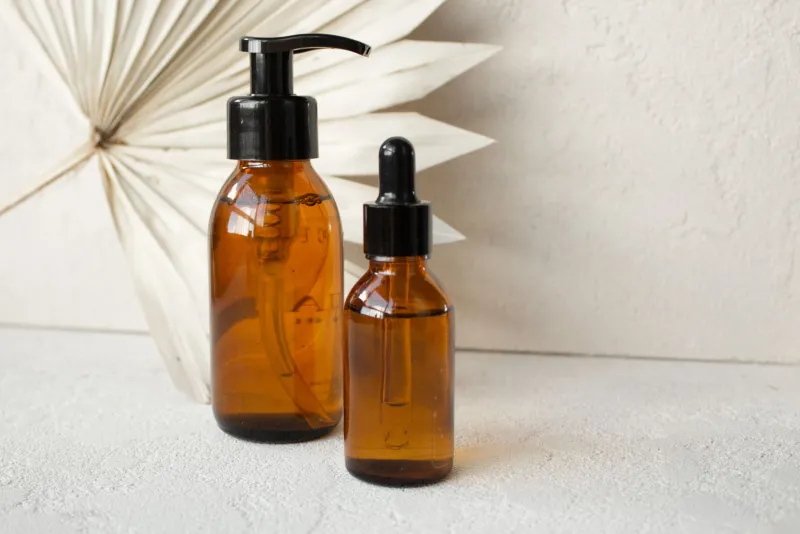
That is exactly the moment the sample shelf was invented for. Not as a marketing trick, and not as a way to nudge you into buying more. A small bottle — a taster, a try-out, a whatever-you-want-to-call-it — is simply a lower-stakes way to find out whether a product suits you. And in a neighbourhood shop, where the person behind the counter is likely to remember your face, that feels less like a sales tactic and more like good manners.
Why a small format is not a small thing
CBD is a bit like a new pair of boots. You can read every review on the internet, ask three friends, and still not know whether it will rub your heel the wrong way. The only real test is wearing them around the house for an afternoon.
A taster bottle does the same job. It gives you enough to establish a routine — a few drops in the morning, perhaps, or a balm on a sore shoulder after a day at the desk — without asking you to commit to a full-size pot that might end up at the back of a cupboard next to the breadmaker.
There is also the practical side. CBD products vary in strength, carrier oil, and flavour. What works beautifully for your neighbour might feel entirely wrong for you. A small format lets you notice the difference between this is pleasant and this is not for me before your bank statement gets involved.
And yes, the price of a taster is often less than a takeaway for two. That is not an accident. It is a shop saying: try it first, decide later.
How to ask without feeling awkward
The question is simpler than most people think. You do not need a speech. Something along the lines of: Do you have a smaller size of this one I could try first? works perfectly.
If the answer is no, that is useful information too. A shop that only sells full-size bottles is not necessarily a bad shop — but it is telling you something about how it views your risk. A shop with a taster shelf, or a small-format option behind the counter, is usually one that expects you to come back. That is a different kind of confidence.
A few polite things to ask while you are there:
- How long should a taster last? A good answer will give you a rough idea of days, not just millilitres.
- Is this the same formula as the full-size bottle? It should be. If it is not, ask why.
- What is the best-before date on the small one? Tasters can sit on shelves too.
You are not being fussy. You are being a sensible adult with a budget.
The three-day taster plan
You do not need a spreadsheet. A scrap of paper and a pen will do. The idea is to give the product a fair hearing without turning your week into a clinical trial.
Day one: just notice
Use the product as directed, at roughly the same time you would normally use it. Do not expect fireworks. Do not expect nothing, either. Just pay attention to whether the routine feels easy or fiddly. Did the dropper behave? Did the balm absorb, or sit on your skin like a greasy reminder? Note one word: easy, messy, pleasant, odd.
Day two: repeat, and check the clock
Same routine, same rough time. This is where you notice whether it fits your day. A taster that asks you to do something complicated at 6.45am is probably not going to survive a real week. One that slips into your kettle-and-toast moment is a keeper.
Write down whether you remembered to use it. Forgetting is not a failure — it is a signal that the format does not match your habits.
Day three: the honest question
Would you miss it tomorrow? Not is it miraculous, and not did it cure anything. Simply: would you notice if it were not there? If the answer is a shrug, that is a useful answer. You have saved yourself sixty pounds and a cupboard full of good intentions.
If the answer is actually, yes, I would, then you have earned the right to buy the full size with a bit of confidence.
What to note, and what to ignore
Note the boring things: how many drops you used, how long the bottle lasted, whether the flavour was bearable, whether the packaging leaked in your bag. These are the details that decide whether a product becomes part of your life.
Ignore the loud things: the label that promises the earth, the friend who swears by a brand they have used for a fortnight, the part of your brain that wants a dramatic story. CBD is not a drama. It is a small, steady habit, and the taster is there to help you find out whether it suits yours.
The shop's side of the counter
A neighbourhood shop does not benefit from selling you one expensive bottle you regret. It benefits from you coming back next month, and the month after, and telling your neighbour that the place on the corner is worth a look. That is why a sample shelf makes commercial sense as well as human sense. A £9 try-out is not a loss leader. It is a handshake.
So if you are standing at a counter this week, bottle in hand, doing the mental arithmetic — ask the question. Have you got a smaller one? It is a perfectly reasonable thing to say. And it is often the beginning of a much calmer relationship with the whole shelf.